Last week, I took a solo trip up to Georgia and realized what living in Armenia means to me.
Traveling to other countries from Armenia is difficult. 72% of Armenia’s border is closed. 27 miles are open at the tail of the country, in Meghri, bordering Iran. Not the ideal destination for an American (though I’d kill to go). The rest is in the north, bordering Georgia (another Peace Corps country). For Armenians, Georgia is the first place they go for a vacation. So I followed suit.

For the first six months in country, Peace Corps volunteers are not allowed to leave their site and stay overnight in another location. August 23rd was the first official day my cohort could stay overnight. After we celebrated in Yerevan, I took a shared taxi up to Tbilisi for a week. A vacation was overdue.
Armenia and Georgia are both Caucasian nations but they have different cultures. These differences were pretty obvious to me, being an American living in Armenia. Here’s what I noticed:
TO BE EUROPEAN OR NOT TO BE EUROPEAN
Georgians heavily identify with Europe. Since November 2024, Georgians have been protesting the pro-Russian Georgian Dream party after their decision to suspend Georgia’s bid for acceptance into the European Union.
Tbilisi is filled with political graffiti, often of the Georgian and EU flags side by side. Georgians take any opportunity to assert their European-ness. Landmarks, nature and heritage sites are always put into comparison with the European continent. Tbilisi’s architecture has a much more European feel, similar to some central European countries like Hungary or the Czech Republic.
Armenians do not have this same identification with Europe. They do not call themselves European, and are more likely to call themselves Caucasian or simply Armenian. This was a contrast I noticed after spending some time in Tbilisi. I don’t want to go as far as to say Armenia might have more cultural similarities with the Middle East, but it is undoubtedly more Eastern than Georgia.
EASTERN ORTHODOX VS. ORIENTAL ORTHODOX
Armenians and Georgians are both Orthodox Christians, but different branches. Georgians are Eastern Orthodox, and share a similar faith with Greeks, Russians, Serbians, Romanians and Macedonians. Armenians are Oriental Orthodox, like the Egyptian Coptic Church, Malankarans, Syriac Church, Eritrean and Ethiopian Church.
To me, Armenians seem more lax about their faith than Georgians. It’s more of a cultural than religious practice. I can enter churches here wearing pants, with my shoulders and knees uncovered, or my hair showing. I prefer this way of worshipping.
In Georgia, I had to wear a headscarf and a modest dress to enter some of the holy sites. Georgians cross themselves whenever they pass a church on the street. Churches here seemed more active than in Armenia, with clergy present and services on going throughout the week. Paritoners light candles, genuflect and pray. In Armenia, it’s common to light a candle and then leave.
GEORGIANS ARE MORE CLOSED OFF
Hospitality is also a big part of Georgian culture, but to me Georgians seem a bit more closed off than Armenians. They seem reluctant to open up to foreigners, and have sort of stern façade. They have good reasons to act this way– political unrest, throngs of tourists, 20% of their country being occupied by Russians.
That being said, I was offered free wine, coffee and pastries in Tbilisi. Near Kazbegi a Georgian-Armenian guy gave me some homemade honey. I wonder how much of this was hospitality, and how much of it had to do with me being a solo female traveler. Georgian men are more persistent than Armenians. At least that’s what my host mom said.
Armenians have a warmth and charm that is undeniable and hard to find anywhere else in the world. There’s a phrase in Armenian “Mernem qez” — I’ll die for you. That shows the extent that Armenians will go to for their friends.
RELATIONSHIP WITH RUSSIA
A noticeable difference between Georgia and Armenia is their relationship to Russia. Georgia is staunchly anti-Russia. In Georgia, Russia is an authoritarian force that is interfering with and degrading democracy in their country. It’s easier to find English speakers in Tbilisi. There’s much less signage and writing in Cyrillic compared to Armenia. Russophones are met with hostility even though the majority of population speaks their language. Something interesting I saw was Russian tourists entering stores, and using English even though the majority of Georgians speak Russian.
For Armenians, Russia is a close friend. Russian is the lingua franca here when Armenian isn’t being used. Men go to work in the country in the summer, a large portion of the diaspora calls Russia home. Russian is interpsersed throughout slang and common language, and there’s a sort of unspoken status that comes with being Russian. Armenia relies on political and economic ties to Russia to maintain their standing in the South Caucuses.
TOURISM INFRASTRUCTURE
Tbilisi is much more touristy than Yerevan. The old part of the city is filled with kitschy restaurants, and it’s crawling with tour companies. In Yerevan, you might only see souvenir shops near Republic Square. Armenians are throughout Yerevan. In Tbilisi you could see the areas that segregated Georgians and tourists plainly.
I’m still deciding which city I like better. Tbilisi had more going on, more bars, interesting restaurants, a thrifting scene and beautiful architecture. I met with an Armenia RPCV living in Tbilisi while I was traveling, she’s of the opinion that the city is 10 years ahead of Yerevan. I think this is a fair assessment.
But to me, Yerevan has more of a soul. Since Armenians and tourists are not segregated, you get to see how everyday Yerevancis live their lives. Walking around Yerevan, you see more families and children around. It’s a friendly, warm and safe city.
ETHNIC OPINIONS
Generally, I hear Armenians speak positively about Georgians. They have said their cultures are similar, that they share the same faith. Something that is endlessly debated in the Caucuses is whose land is whose. At one point, there were more Armenians living in Tbilisi than Georgians. There’s a cathedral there to show for it.
When I had conversations with Georgians when traveling, their opinions had a different flavor. They insisted that Armenians are not actually Armenian. It’s a common and disturbing narrative about Armenian ethnic identity. I was told that Armenians are actually Persians, that the real Armenians are hiding somewhere in the mountains in the Tavush region (and that they look more like Georgians), that Armenians aren’t actually Armenians they’re gypsies, and of course that Georgians are simply Georgians.
One evening I was eating in a restaurant in Tbilisi. My waiter asked me if I was a tourist. I paused for a second, and then answered yes. That question seems a little more complicated now that I’ve lived in the Caucuses for a while. I’m by no means a native in Georgia. Far from it, but I understood the rhythm of things better than I would have if I was just visiting from the States.
Peace Corps has impacted the way I travel. The number one thing that is stressed for volunteers is integration, becoming part of your community and acting as someone from your country of service might. I think this made me more open to having conversations with locals in Georgia, finding out where they eat, where they go to relax, have a drink.
Something I didn’t expect when coming home from Tbilisi was just how much I missed Armenia and how I feel like a local here. On the day I returned home, I went to Avlabari metro station in Tbilisi without a plan to get home. There, I saw a group of drivers standing and talking to each other in Armenian. I walked up, said I spoke Armenian and within a minute I had a taxi home that was half the price the Russians were paying for. On the drive home, the driver asked what I wanted to listen to. “iharke haykakan yerger” (Armenian music, of course).
Again, my feelings about Armenia surprised me when I crossed the border back. Excitement when I saw the Armenian flag at the Bagratashen checkpoint. Immediately things made a more sense to me. I could communicate again, laugh, feel confident that I knew how to navigate home. I was Meri jan again, not just Mary. I asked my driver to drop me off halfway from Yerevan in Vanadzor. From there I grabbed a marshrutka, then a taxi back to my host family’s house.
Finally, my last surprise was returning to my site. My heart grew a little larger when I heard our dialect being spoken. The exhaustion of travel disappeared when I walked through the door to my host family’s home, my little host brother jumped into my arms and gave me a kiss on the cheek. My host mom told me not to be gone for so long next time, and sat me down at the table to try the vegetables she had been pickling that week.
Taking my vacation to Tbilisi made me realize something, I see Armenia as my home now. It’s an odd feeling, having this much love for someplace that I wasn’t born or grew up in. I think part of that love has come from making Armenia into my home, slowly integrating into my site, playing with my host brother and the kids that live on our street, going for walks with my coworkers and sipping on coffee together, chit-chatting with the girl who does my nails, sitting with my host mom while she teaches me to knit, learning those phrases whose depth and meaning in Armenian can’t be translated into English.
In Armenia, I’m neither a traveler or a tourist. I’m simply at home.
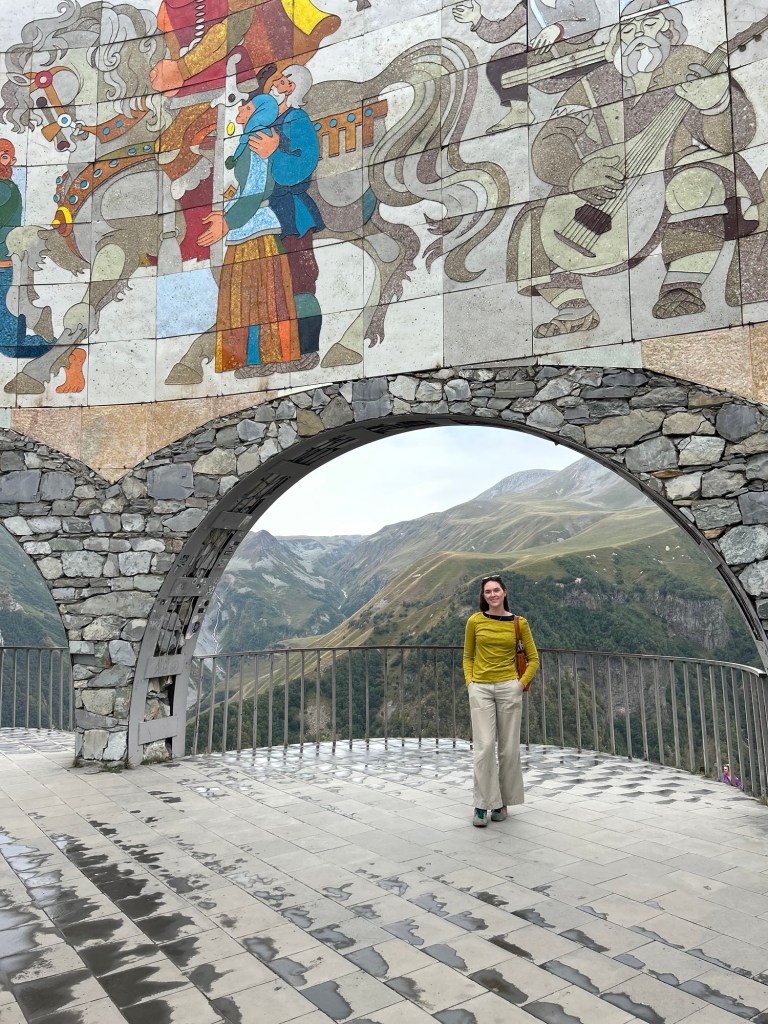
Georgian-Russian Friendship Monument (how ironic) 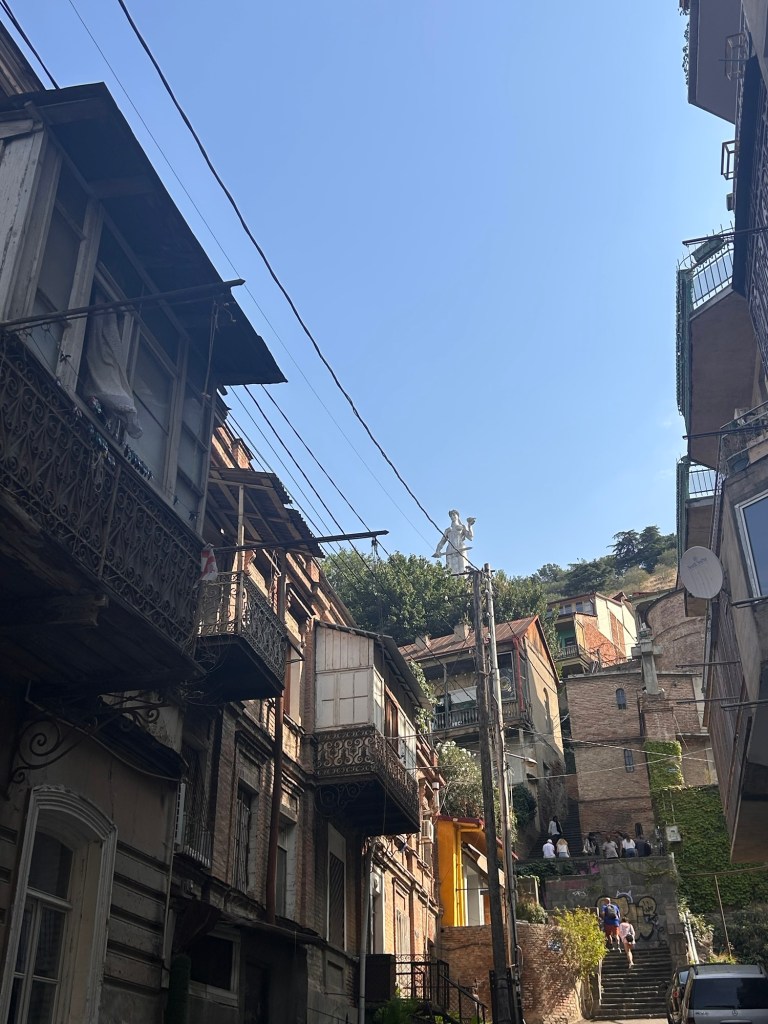
Mother of Georgia 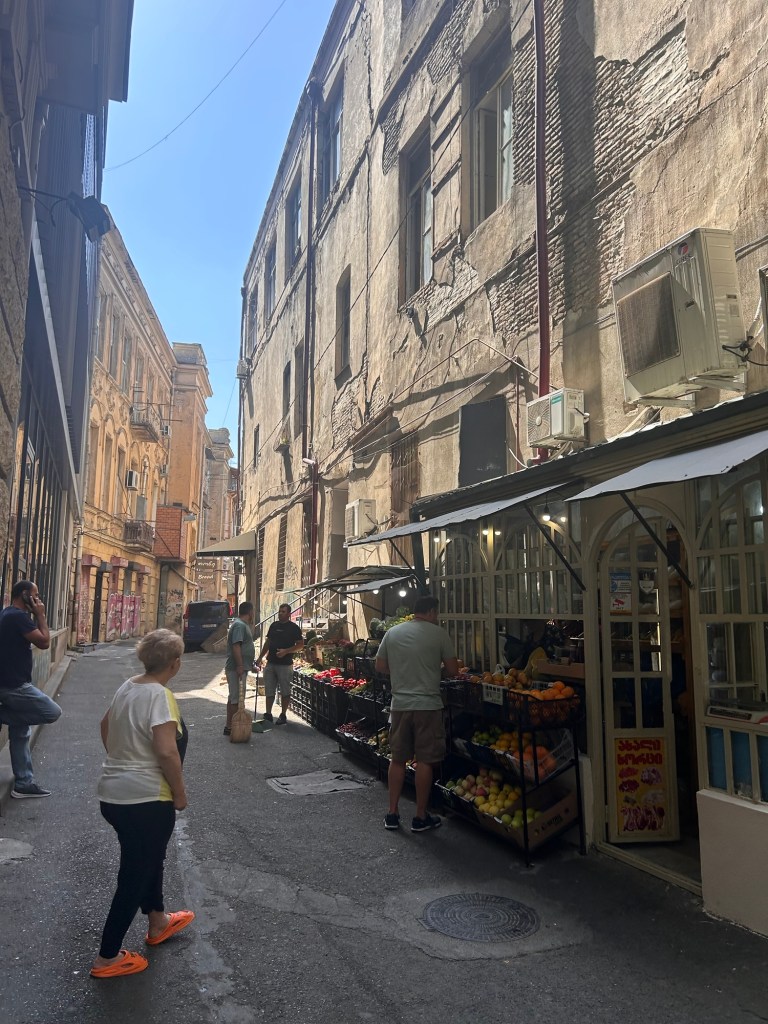
Tbilisi Streets 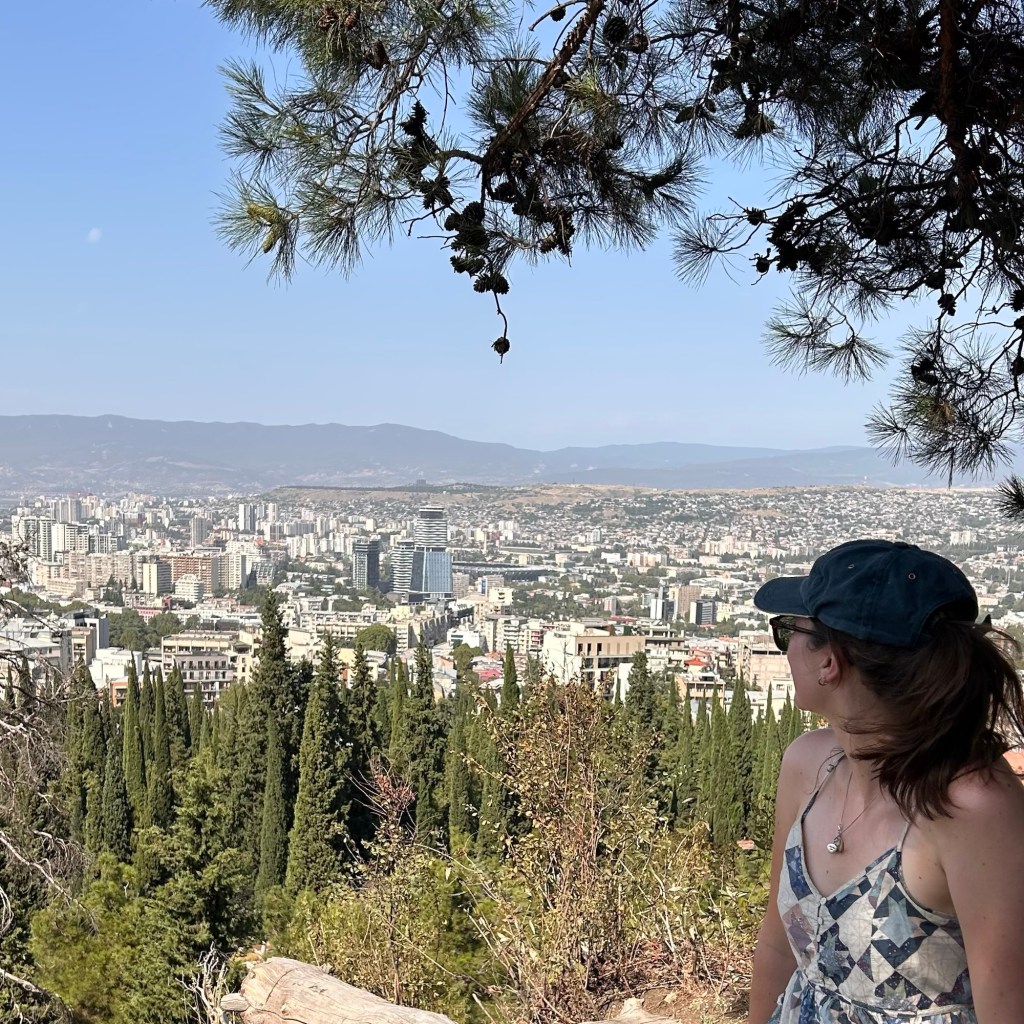
A hike I took! 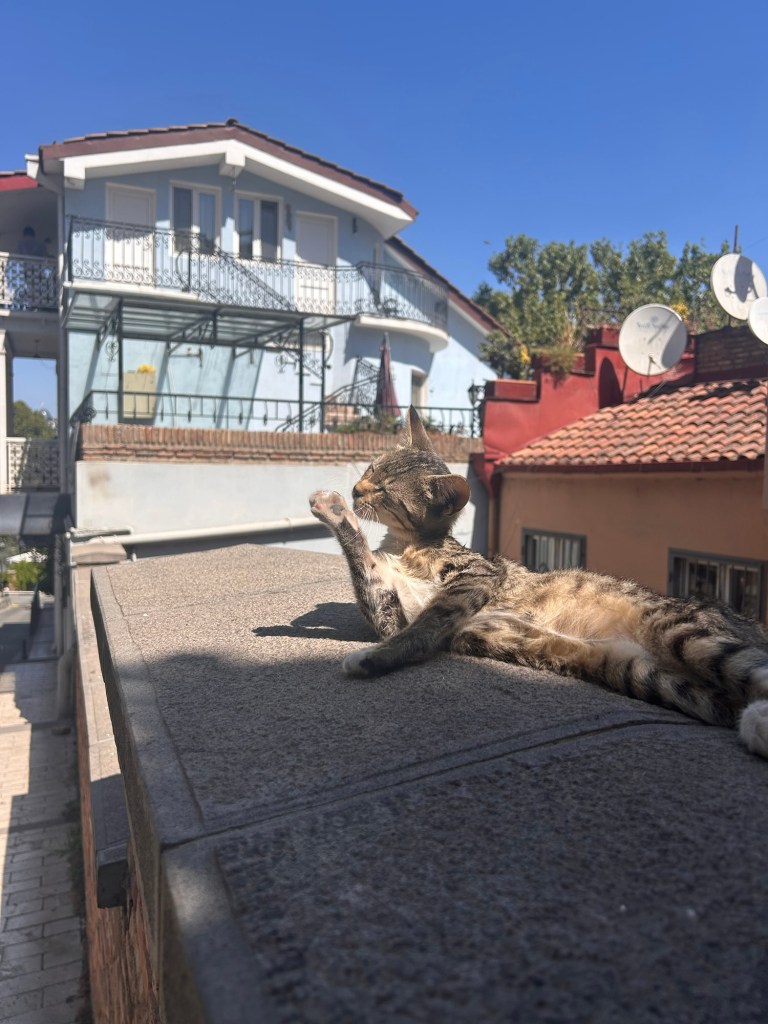
kitty in the old city 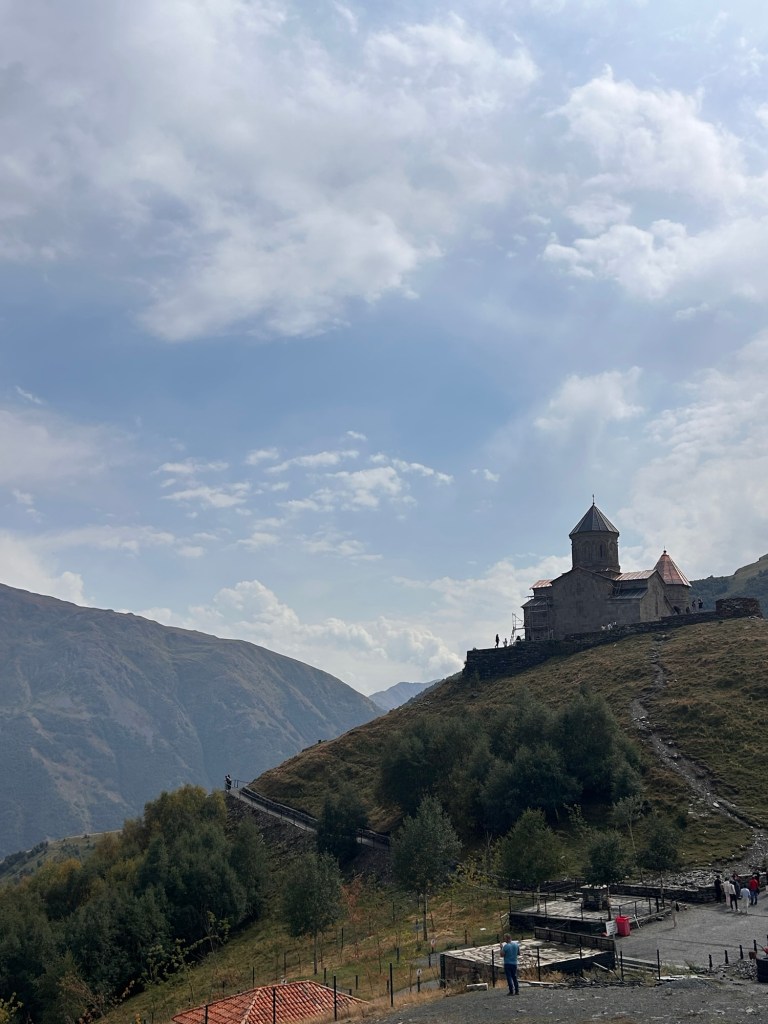
Gergeti Trinity Monastery 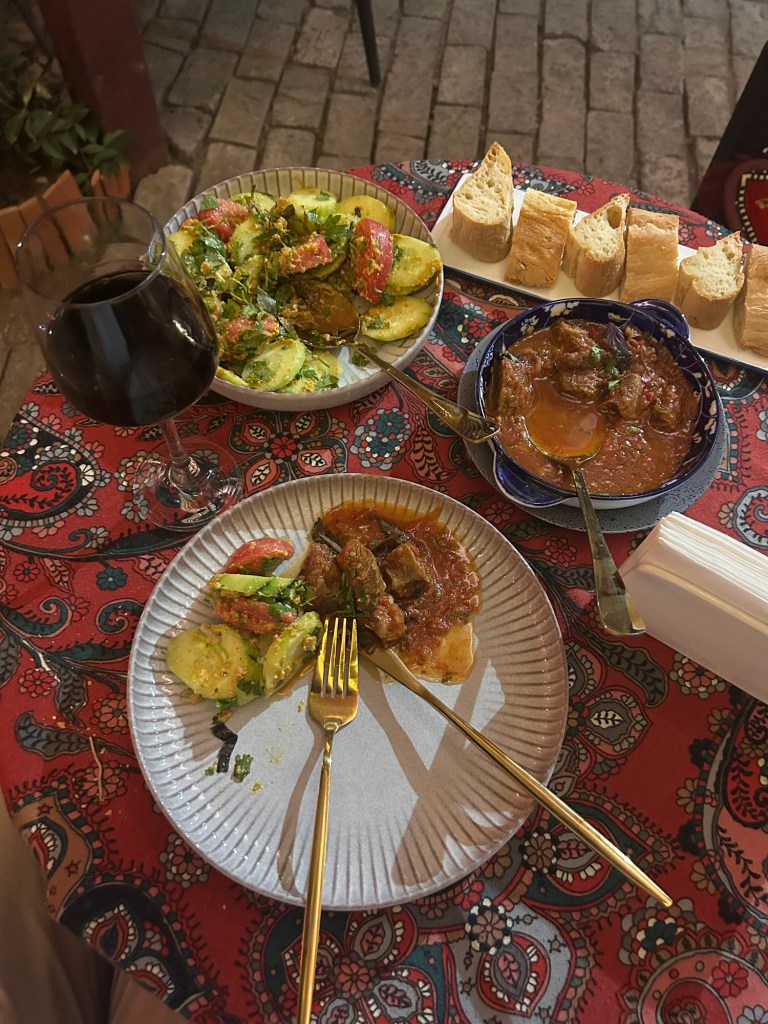
Georgian Meal 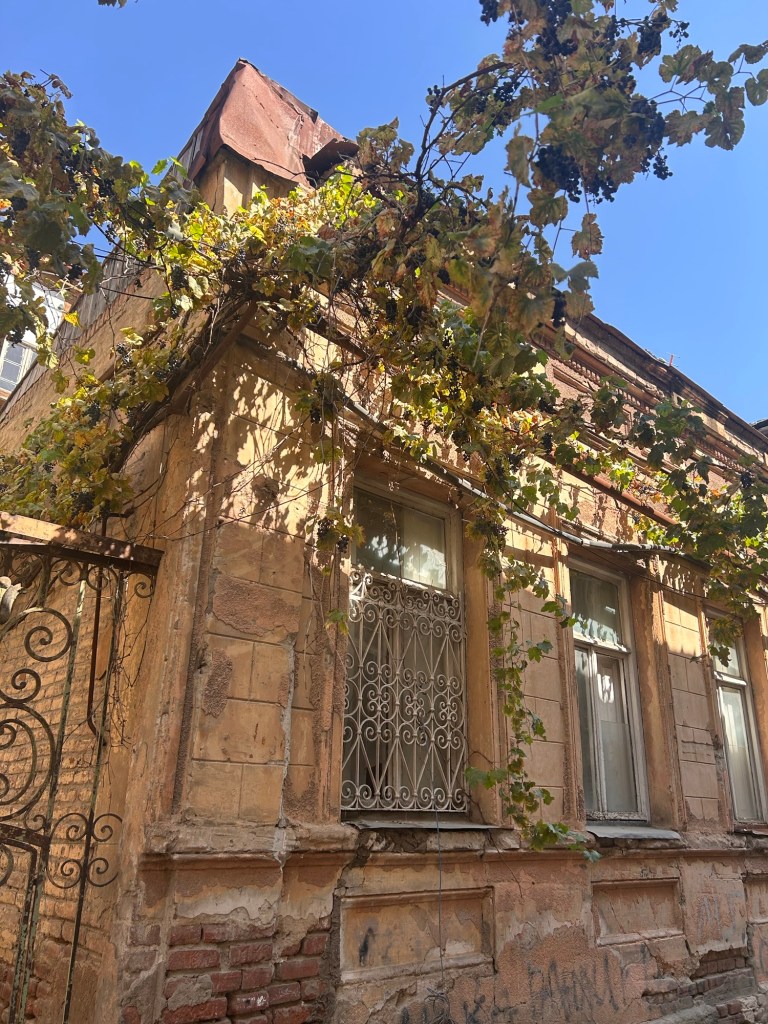
Tbilisi Streets 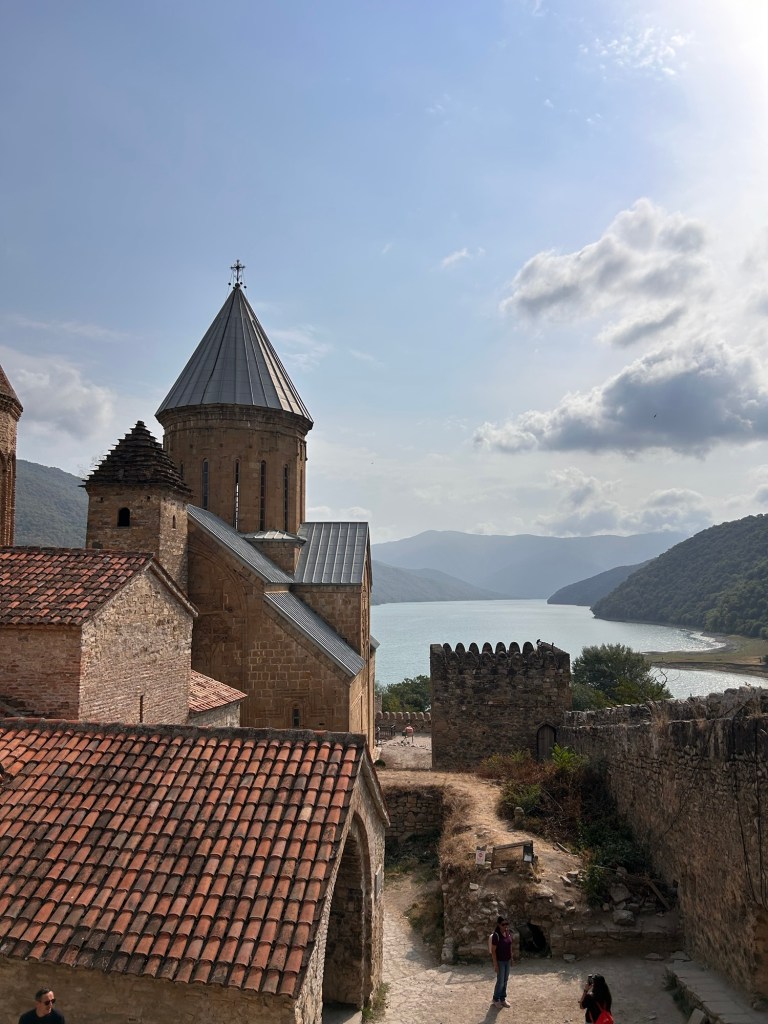
Ananuri Monastery 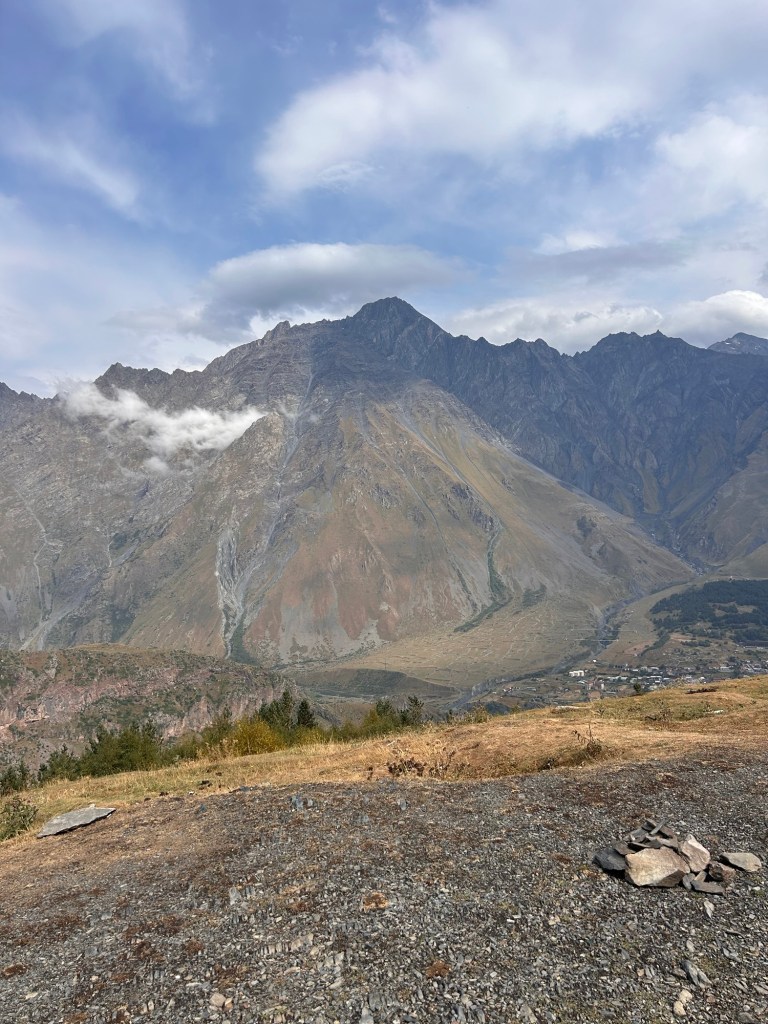
Mountains up near Kazbegi 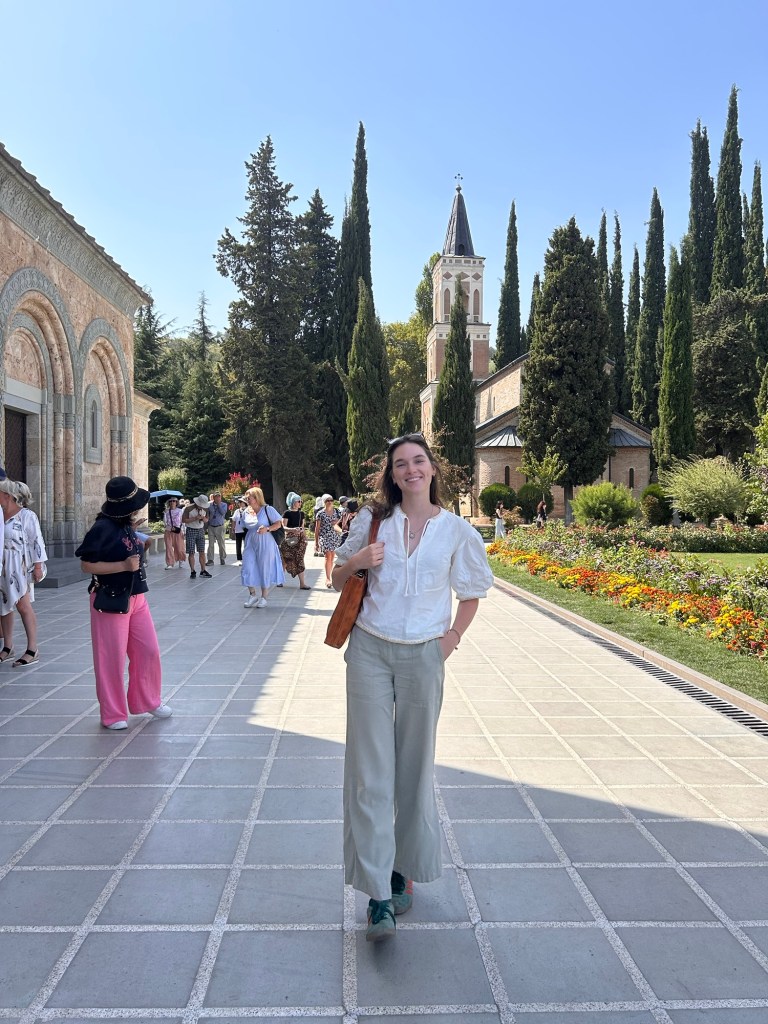
Bodbe Monastery 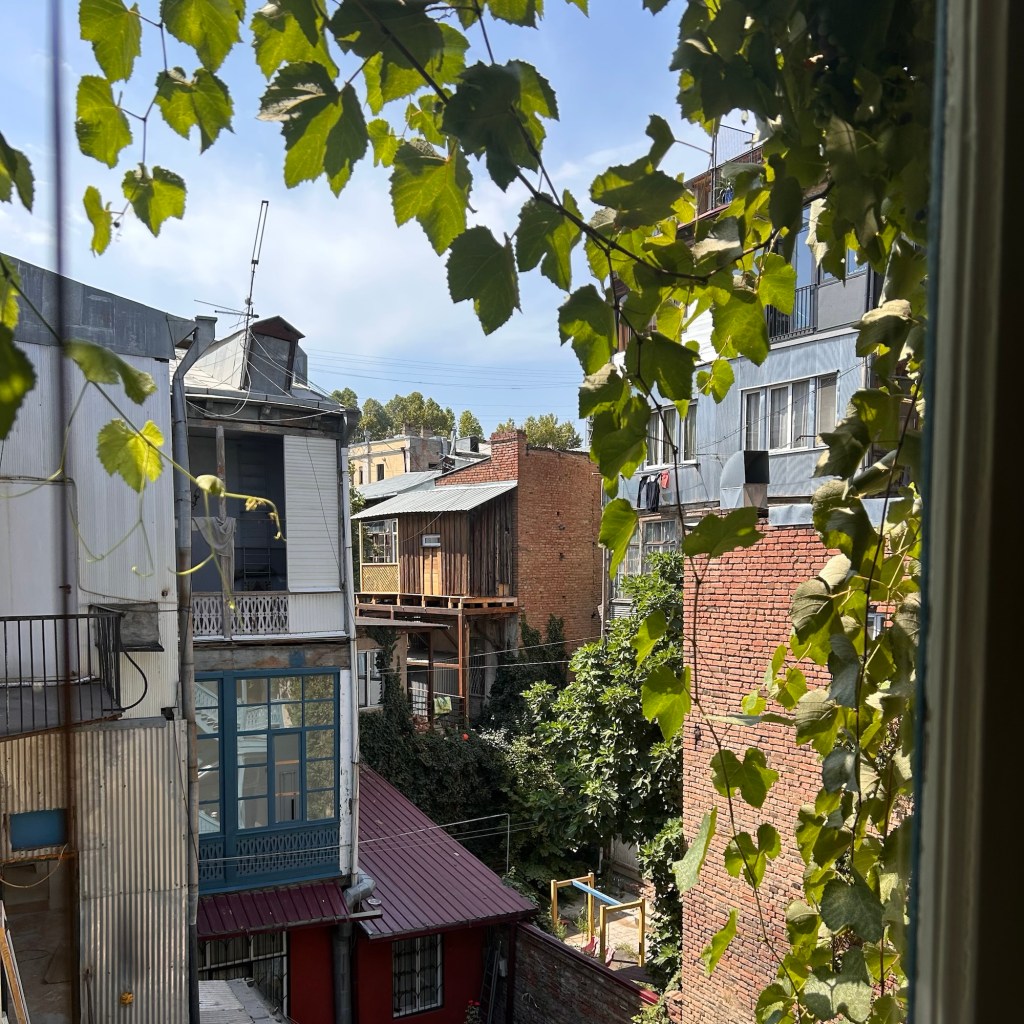
View from my hostel’s window 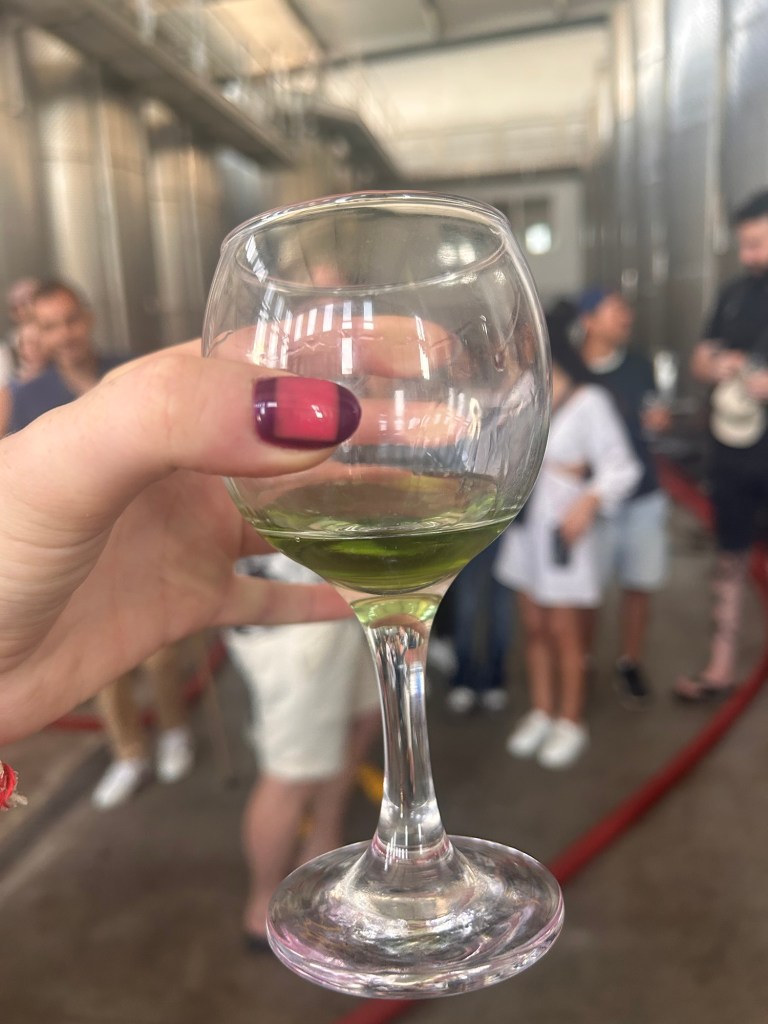
Tarragon ChaCha (Strong, usually homemade Georgian Spirit)
 mary-go-round
Leave a reply to Zahra Cancel reply