March 10th was my one-year anniversary in Armenia, and you could say I’m out of the honeymoon phase. I have a routine at my site. I know what to expect day to day, and communication is less of a barrier. A year in, I feel more attuned to Armenia’s nuances, contrasts, and contradictions.
This article started as a walk around my site this month, where I took the photos displayed below. One was brand new, the windows freshly installed. The other old and dilapidated, perhaps damaged from the 1988 earthquake that flattened 80% of Gyumri. Armenia is a country of high contrast. This is a typical scene walking around the country, in Yerevan, Gyumri, and smaller cities and towns alike.
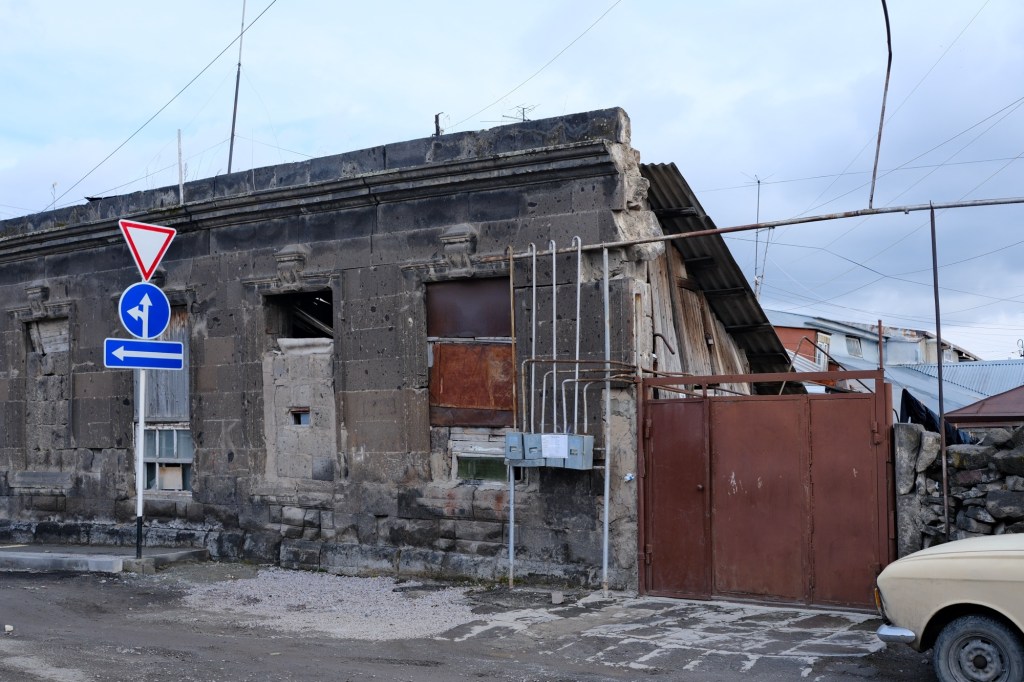
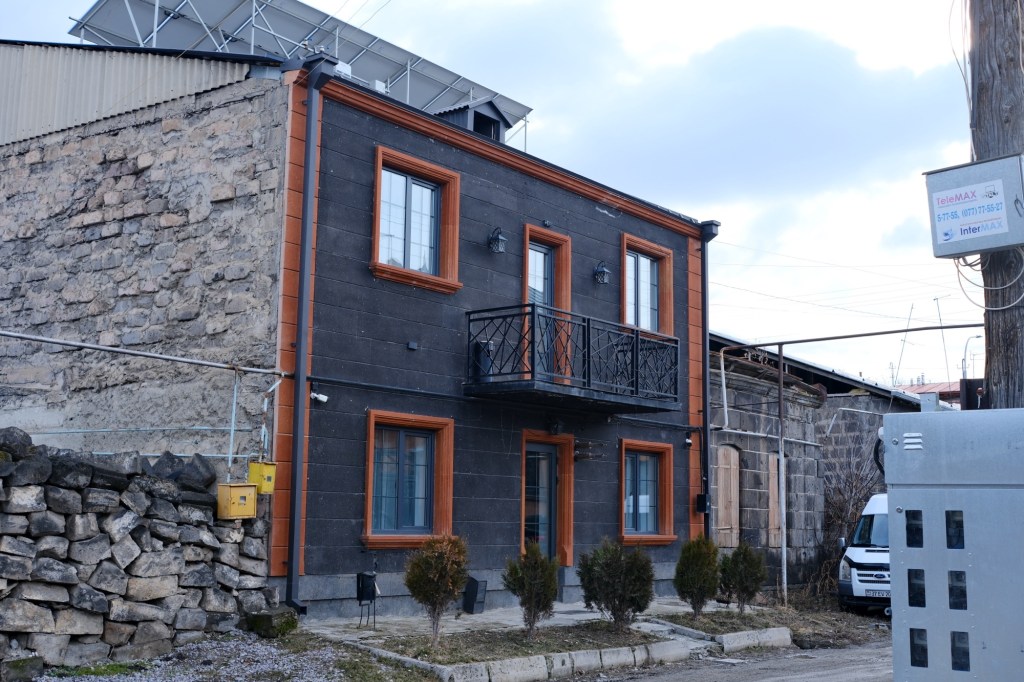
This February, I went to Istanbul. Returning to Yerevan felt like a homecoming, but it came with a sadness I didn’t expect.
Türkiye is Armenia’s historical enemy, culpable for the unrecognized atrocities of the Armenian Genocide. Seeing Istanbul, a city of 15 million, was bewildering after living a year in a country of 3 million. The typical Western narratives I had been fed about the city, that it is chaotic, unclean and backwards, dissolved. The public transport is clean and on time, and the people are cosmopolitan. The city is eclectic and international, brimming with money and tourists. Istanbul stands, and Türkiye flourishes. My assumptions crumbled, and my feeling of heartbreak for Armenia deepened.
The Ottomans, historically cast as the sick man of Europe, the thorn in the side of the modern era, have reinvented their nation. What does this mean for Armenia? A resurgent Türkiye, bound to Azerbaijan through the “one nation, two states” alliance, has little incentive to move toward reconciliation. The Genocide remains unrecognized. Karabakh is gone. A weakened Türkiye might eventually have faced pressure to reckon with history. A confident one does not. History has never been on this small, mountainous nation’s side. Istanbul’s prosperity was a sharp reminder.
There are ghosts of Armenian heritage throughout Istanbul. Churches in the traditional style with pointed roofs and doors that are only sometimes open to strangers. A memorial to the slaughtered Turkish-Armenian journalist, Hrant Dink, who wrote openly about the Genocide and reconciliation. The remaining Armenians who still call the city home, inheritors of a community that once numbered in the hundreds of thousands.
An interesting conversation I’ve had many times over with Armenians is whether they believe in ghosts. Most do not have a story, and most do not believe. However, Americans have a distinct ghost-story culture. These stories have the same formula: flickering lights, a mysterious death, an abandoned building, cursed land. I’ve come to think these are a way to process something we’ve never fully acknowledged: the rapid conquest and colonization of the continent, the attempt to eradicate Native people, and the transatlantic slave trade. “The gravest crime[s] against humanity“, seeping into our soil and coloring our storytelling. We sense we did something terrible, but we refuse to accept it. The land remembers, as do the descendants of the peoples we tried to erase. The American ghost story is a way of living this contradiction.
Armenia has its own ghosts, and it does not need campfire stories to be reminded of them. The Genocide that led to the creation of a diaspora larger than modern Armenia. The earthquake. The war over Artsakh, fought twice, lost the second time. History is always bound to the present, but in Armenia it is woven in a particular way.
In the travelogue Imperium, by the Polish author Ryszard Kapuściński, he characterizes Armenia by its “magnificent ascent, and then a dispiriting fall.” There is a particular weight to knowing that the greatest days of your civilization were a millennium ago, and that the centuries since have largely been a story of surviving whoever happened to be in power: Roman, Persian, Byzantine, Ottoman, Soviet. Armenia has endured by bending without breaking, preserving its language, its church, its alphabet, its identity, against considerable odds.
“A nation that does not have a state seeks salvation in symbols.” Armenia has had statehood since 1991, but it is a shrinking state, one that has been forced to make painful concessions of its own land and to its enemies. Yet its national symbols are fierce, the flag, the cross, the image of Mount Ararat, which can be seen from Yerevan on a clear day, claimed by another nation but belonging to Armenians. Armenian patriotism is not the patriotism of a comfortable nation. It is the patriotism of a people who have held onto their language, their church, their alphabet, their identity across centuries of occupation, and who have learned that no one else will remember for them.
A year in, I am still a guest here. I came to help with something small: youth programs, English lessons, community work. What I didn’t expect was how much time I would spend thinking about survival. What it looks like across centuries, what it costs, what it requires a people to carry. Armenia has survived things that should have ended it. Walking these streets, past the new windows and structures damaged by the earthquake, I think about what that kind of endurance actually means. Not moving on or refusing to acknowledge the past– remembering, precisely and passionately, so that the loss cannot be completed.
 mary-go-round
Leave a Reply, Email is Not Recorded