It’s summer in Armenia, and outside the stores and markets where people do their shopping, alongside all the fresh fruits and vegetables that Armenians endlessly praise. Parallel to the sidewalk, there are lines of coolers, covered with cardboard to protect them from the sun. Inside these freezers is ice cream, individually wrapped in shiny foil ranging from 150-550dr ($0.40-$1.40).
Kids stand on the tips of their toes, elbow-deep in the deep freeze to pick out their favorite flavors while their grandmothers watch closely and sort the multicolored wrappers into cellophane bags.
“Ayd meky hamov chi, ays vercru aziz jan” (“That one isn’t tasty, take this one, dear.”)
It’s an easy marketing strategy that everyone falls prey to. Myself included. Passing these coolers is a gauntlet of temptation, its quick, cheap and easy. The freezers are right there, all you have to do is lift the cardboard…
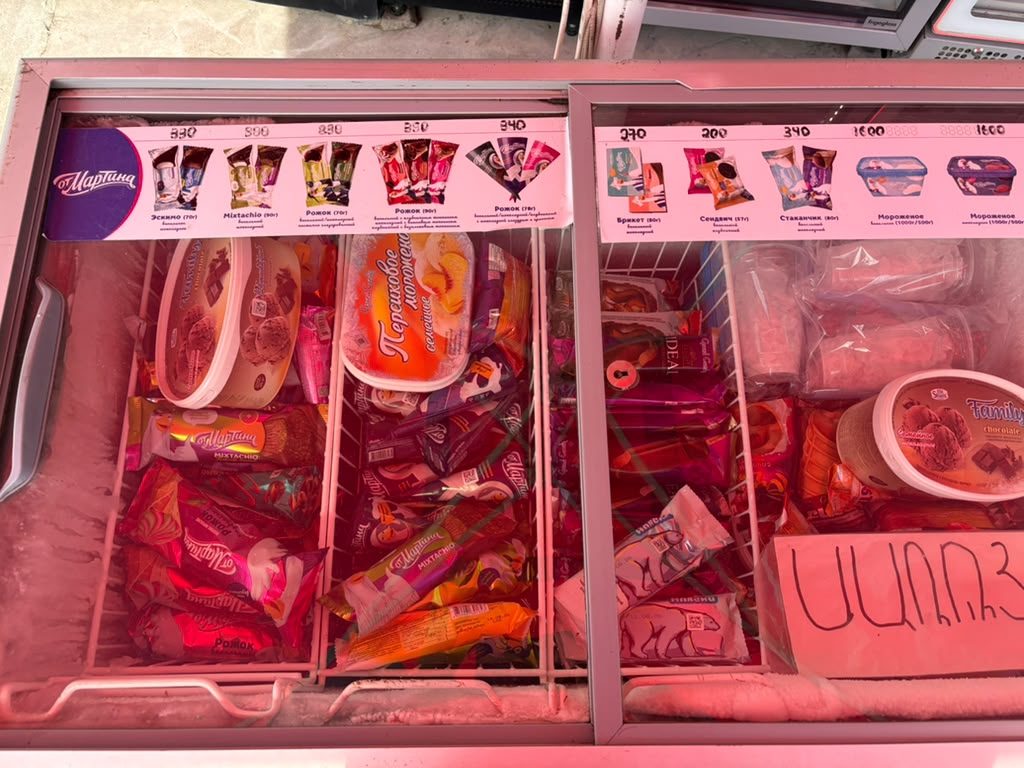
This sort of grab-&-go ice cream was popularized during the Soviet Union, with the invention of plombir by Anastas Mikoyan. Plombir was state-produced ice cream that had to hit a certain fat and sugar content in order to be sold. Precisely, the fat content had to be between 12-20%, and the sugar content 14% or higher. In comparison, American ice cream sits at around 10% fat content. Although no longer state-controlled, plombir is a beloved summer treat that has outlasted communism.

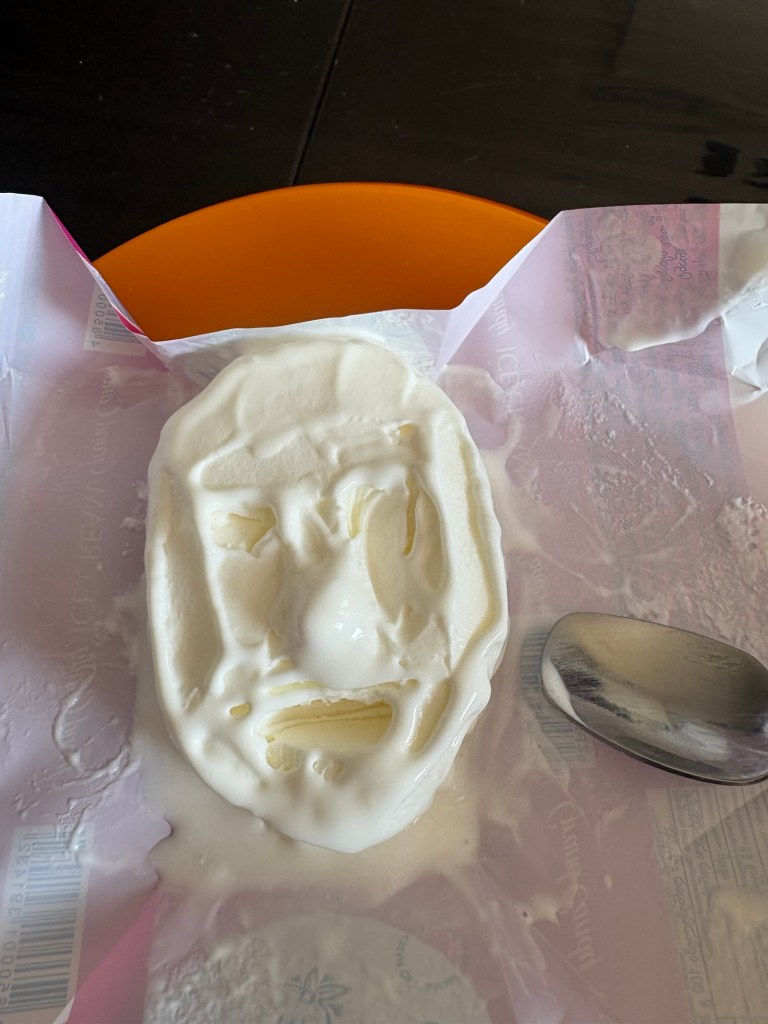
Plombir looks unassuming and maybe even a little unappetizing. It’s anything but. Its high fat content makes the ice cream denser and more velvety. Unlike American packaged ice cream, there is no sad wafery gap at the bottom of plombir, just more ice cream. Under capitalism, the market rewards efficiency, which in practice means our ice cream is half air. The Soviets win this Cold War.
Plombir was the invention of an Armenian citizen of the USSR, Anastas Mikoyan. Mikoyan was installed in the government of the USSR by Lenin and lasted until Brezhnev. He was one of the first Soviet leaders to pay goodwill trips to the US, where he toured American factories and came home impressed by our mass-production. The Soviet plombir was born from plombières, the fatty, almond-flavored French dessert, crossed with American efficiency and scale.
When he returned to the USSR, Mikoyan decided to seize the means of ice cream production. He personally oversaw the quality of ice cream during his term as the People’s Commissar for Food Industry. Stalin even joked about his dedication to ice cream, saying, “You, Anastas, care more about ice cream than communism.”
and isn’t Armenia better off for it?
Armenian food tradition reaches a fever pitch in the summer; meals become a cycle of coffee > xorovats > watermelon & cantaloupe > coffee > ice cream > more fruit, on repeat until the season ends. When eating with my host family, the ice cream we bought from the store would be laid out on a big platter so you could take your pick. Chocolate, vanilla, zebra-striped, and chocolate-covered. My favorite was a vanilla ice cream with a chocolate shell, with CCCP written on the Bolshevik-red wrapper.
Of course this ice cream platter is dangerous. You’re often encouraged to take two or three helpings.
“Take another Meri jan, we’ve got to eat it quickly.” I would be told, and when I refused a half-melted serving would be pushed into my hands.
Yerevan is scorching in the summer; temperatures hit 98°F most days. It’s a city with a lot of concrete, and the heat sits heavy in the surrounding smoggy valley. Coming over the Hrazdan River into the city, my shared taxi would feel like an inferno. Woozy from the heat, the only thing that kept me from passing out was the idea of grabbing my cheap ice cream at our drop-off point.
When in Yerevan with friends, ice cream is always on the menu.
“C’mon, let’s get a thing of marozhni from the xanut before we go to the Peace Corps Office.”
Translated for my English speakers, marozhni is the Armenianized Russian word for ice cream; xanut is a store.
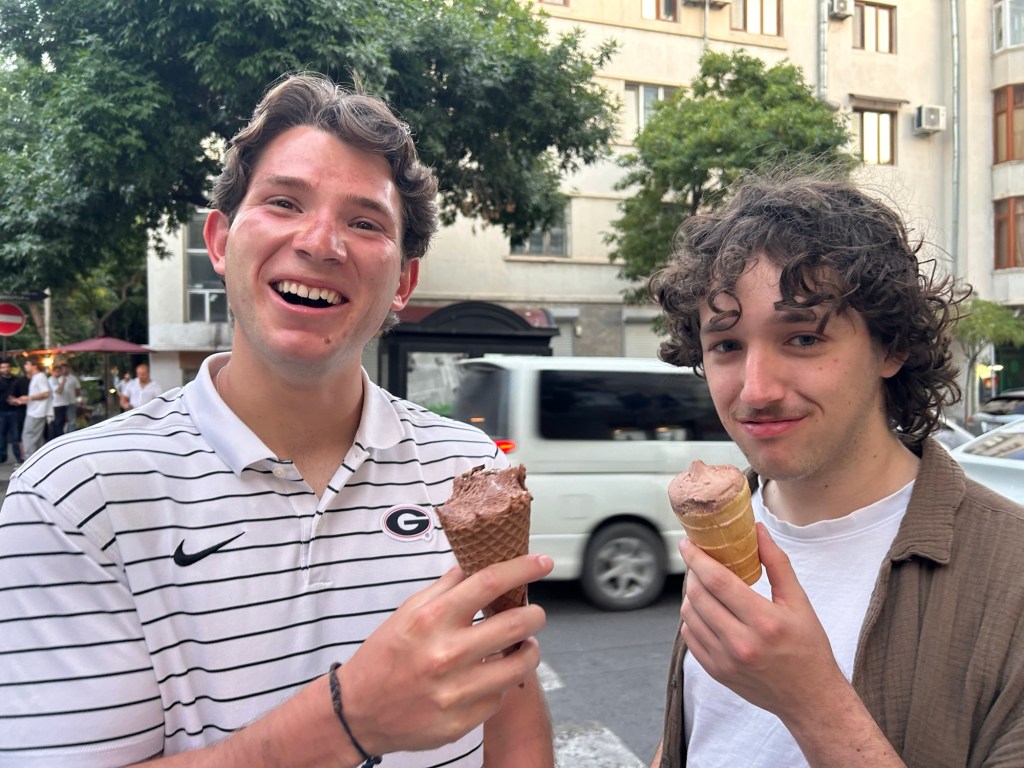
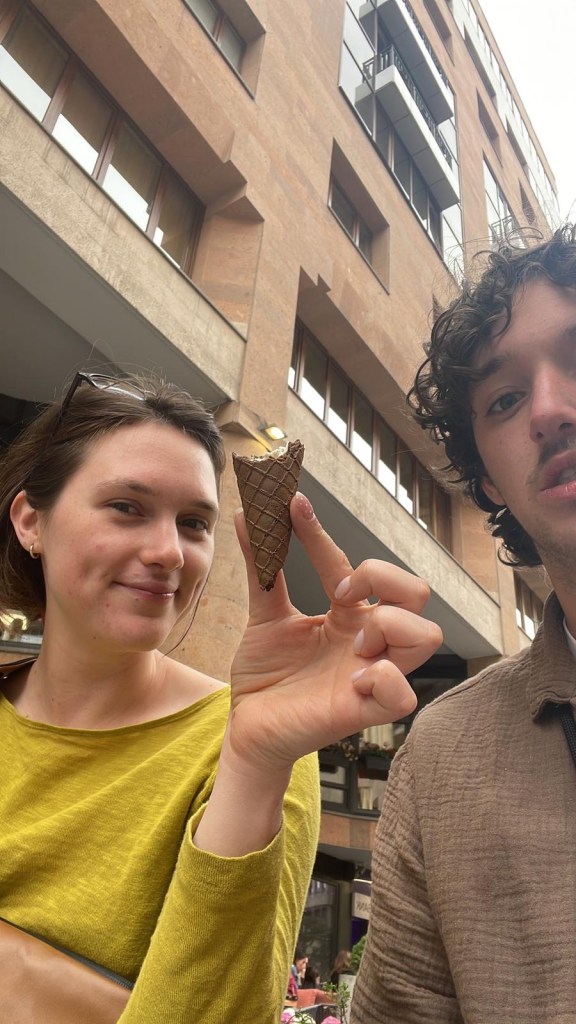
The heat of Yerevan isn’t a prerequisite for ice cream either. In Gavar, stepping off the marshrutka into cool, breezy air, there’s an ice cream stand selling vanilla and melon soft-serve. Gino and Cayden and I each grabbed a cone to christen our hiking trip.

At some point though, the ice cream disappears. It’s squarely autumn now, and my local store has already rolled away its freezers. Here in Gyumri, the cold doesn’t ease in. It shows up early and stays, and by the time I notice the freezers are gone, I’m already wearing a coat.
Ice cream is seasonal here. On the first warm day of spring, the coolers are rolled out and filled; summer starts. At the first autumn chill, they’re taken away; summer’s end. The whole country seems to agree to put summer away at the same time.
This summer was my friends last Armenian summer. Their Close of Service date is May 22nd. We spent it the way you spend a last summer, always going out for another cone, staying out late after the heat breaks.
I’m one of the few in my cohort extending for a third year, so I’ve got more time for more plombirs.
When the coolers come back in spring, a lot of the people I used to comb through them with will be on the other side of an ocean, and I’ll be standing at the freezer by myself, deciding on a flavor. Maybe I’ll buy two anyway.


Leave a Reply, Email is Not Recorded